Devanagari Script: A Complete Beginner's Guide to the Nepali Writing System
Devanagari is the script used to write Nepali, Hindi, Sanskrit, Maithili, and several other South Asian languages. Learning its structure is a valuable foundation for anyone working with Nepali digital content, publishing, or language education.
Structure of Devanagari
Devanagari is an abugida (alphasyllabic writing system). Each character represents a consonant with an inherent "a" vowel sound. Additional vowel marks (called matras) are attached to consonants to change the vowel sound. The script is written left-to-right and uses a top horizontal bar called a shirorekha connecting letters.
Consonants and Vowels
There are 36 consonants and 16 vowels in standard Devanagari. The vowels have two forms: standalone (used at the beginning of a word) and diacritic form (attached to a consonant). Understanding this distinction is key to accurate typing in both Preeti and Unicode layouts.
From Learning to Typing
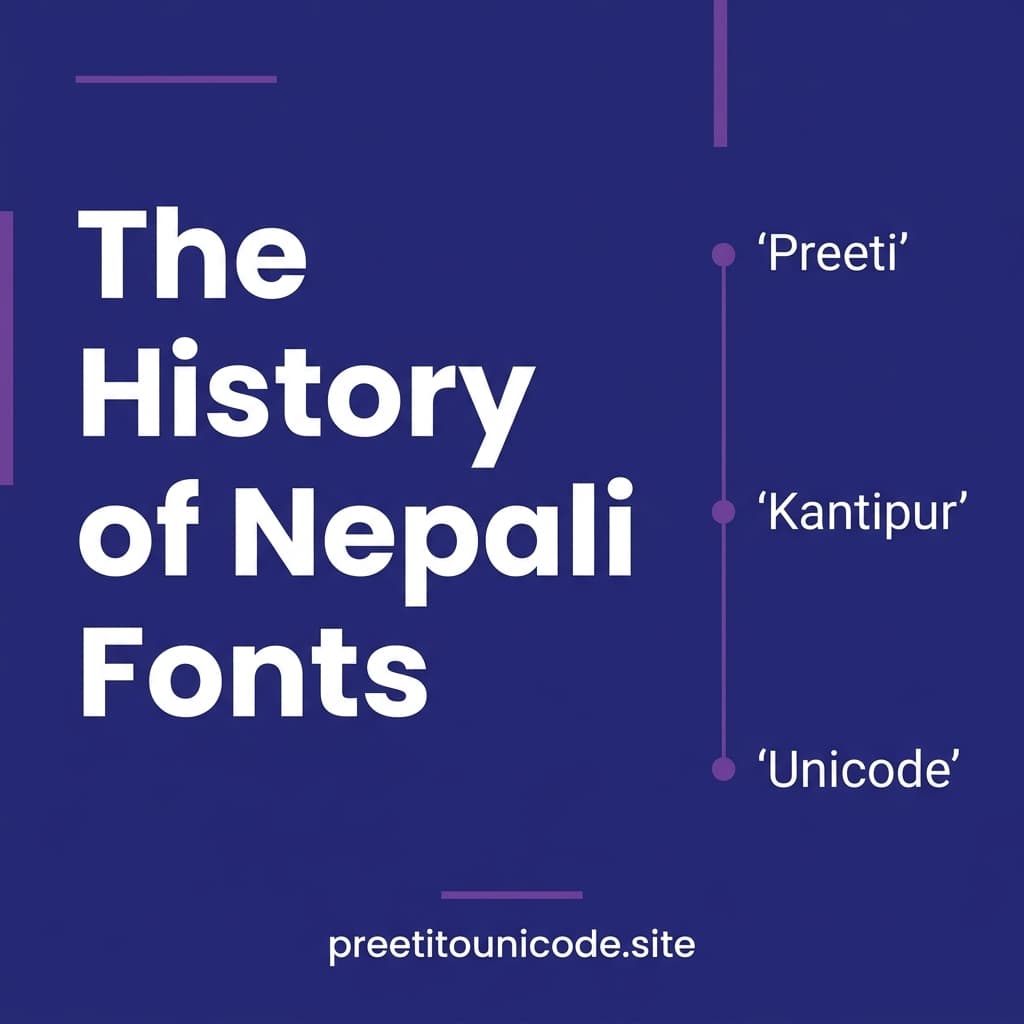
Once you understand the Devanagari system, you can begin typing in Unicode using a system IME or using our browser-based Preeti to Unicode Converter for existing Preeti documents. For font history, see our article on the History of Nepali Fonts.